Essay Rockfish Tackle
Best Soft Plastic Lures for Chesapeake Rockfish
Three soft plastics for Bay rockfish, matched to forage and depth.
The best soft plastic lures for Chesapeake rockfish match the forage present, reach the feeding depth, and allow a low-trauma release. Fluke-style plastics, durable ElaZtech paddletails, and forward-weighted swim shads each serve a distinct purpose. Choosing among them starts with silversides, anchovies, mullet, and peanut bunker.
Why the Chesapeake Bay demands a forage-first approach to soft plastics
The Chesapeake Bay produces an estimated 80% of the Atlantic striped bass population, giving this fishery coastwide significance. The population was declared overfished in 2019 and faces a legal deadline to rebuild spawning stock biomass by 2029. Maryland’s juvenile recruitment surveys have shown poor results for seven years in a row. Those conditions put survival beside catch rate. A lure’s value includes both its ability to draw a strike and the hook configuration used to land and release the fish.
Maryland DNR’s approved 2026 season has a full no-targeting closure in August and a one-fish-per-day slot limit when harvest is allowed. Consequently, the overwhelming majority of fish caught on soft plastics are released. Single-hook soft plastics have become a guide-community standard because they combine forage imitation with a release-oriented approach. Their advantage over hard baits is adaptability. They can be sized, shaped, and worked across the water column to resemble the food available at that moment, making the forage present the proper starting point for selection.
How the Bay's seasonal depth and structure patterns determine which soft plastic to reach for
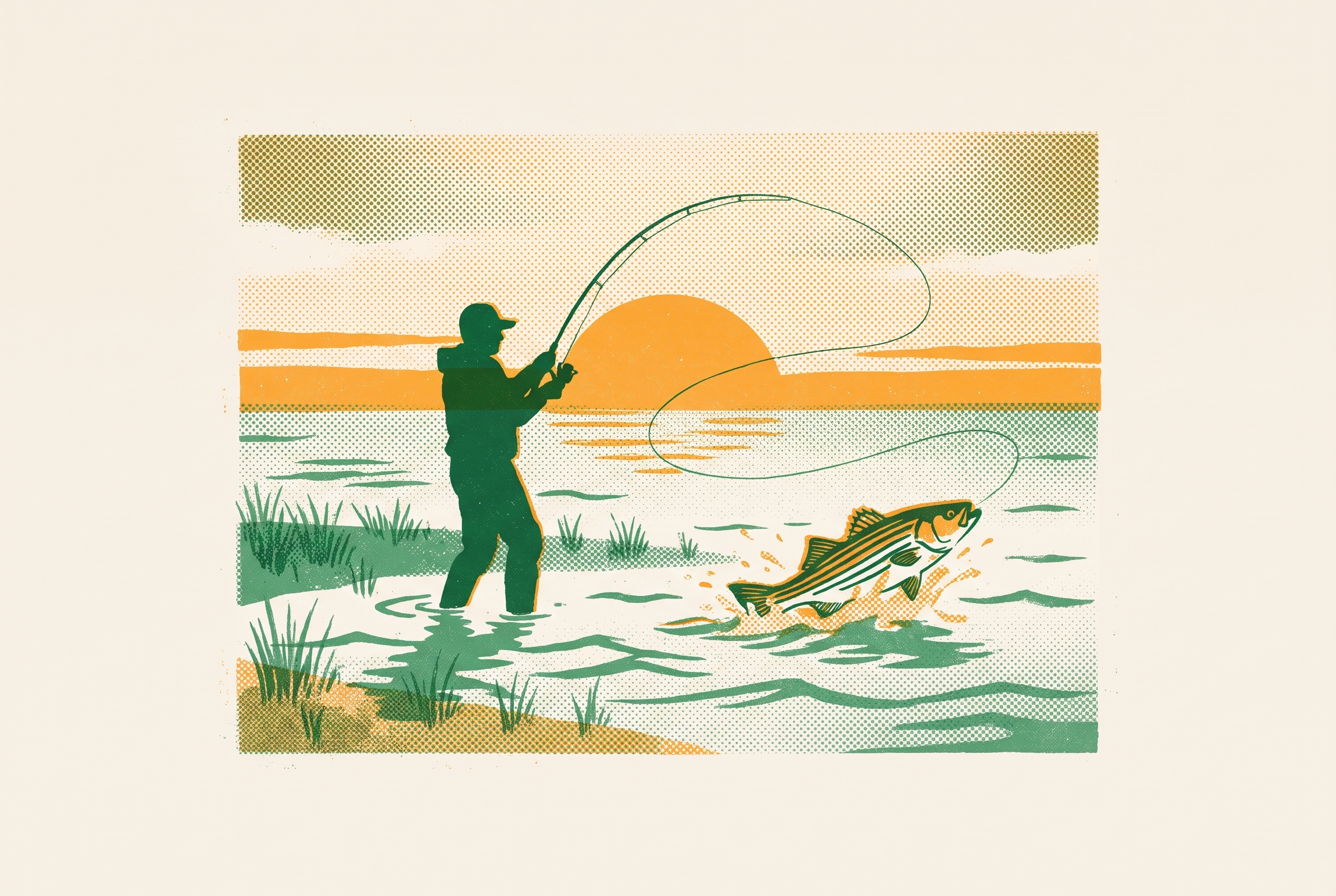
In spring, schoolies concentrate deep in bays and rivers while cold water compresses feeding activity into warmer parts of the day or night. Small, slow-worked plastics suit these conditions because they linger in the strike zone. The same forage profile may still draw bites later, but the presentation must change as the fish move. An angler must weigh depth, structure, season, and water clarity along with how well the bait looks like a silverside or anchovy.
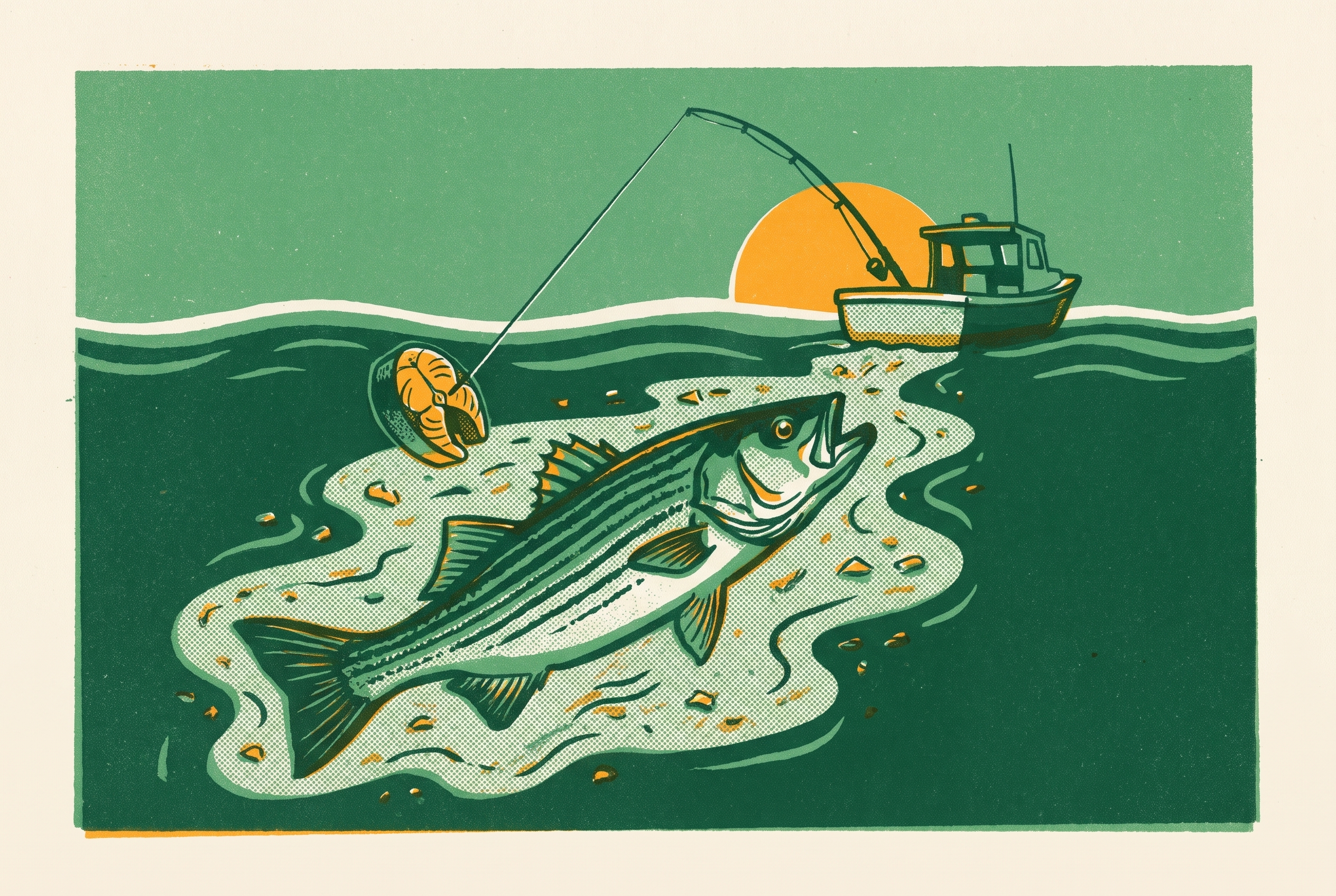
In summer, anglers need to reach cooler, oxygenated water at 30–50 feet. When the season is open, fishing at night with large plastics around Bay Bridge pilings and deep channel edges becomes one of the main ways to catch fish. Casting gives way to vertical jigging when fish suspend deep. Access does not override the August no-targeting closure, however, which reflects evidence of high post-release mortality in hot conditions. Summer timing is therefore a biological constraint as well as a question of finding feeding fish.
In fall, rockfish move again as cooling water draws them out of the rivers. Maryland DNR’s reports through October 2026 describe that movement, regularly citing Captain Jamie Clough of Eastern Shore Light Tackle Charters. Jigging large plastics around bunker schools becomes the main way to catch them. Across these seasons, Bay Bridge piers, rock piles, and concrete abutments are places to find fish by soft-plastic jigging, and most catches around bridge structure come at night.
Tim Hesford at Anglers Sport Center in Annapolis finds tributary schoolies by jigging soft plastics after dark. Very clear Bay conditions following a lack of rainfall have prompted a shift to fluorocarbon leaders, which can help fish accept a bait they would otherwise ignore.
Fluke-style soft plastics for silverside and anchovy imitation in backwaters and bridge structure
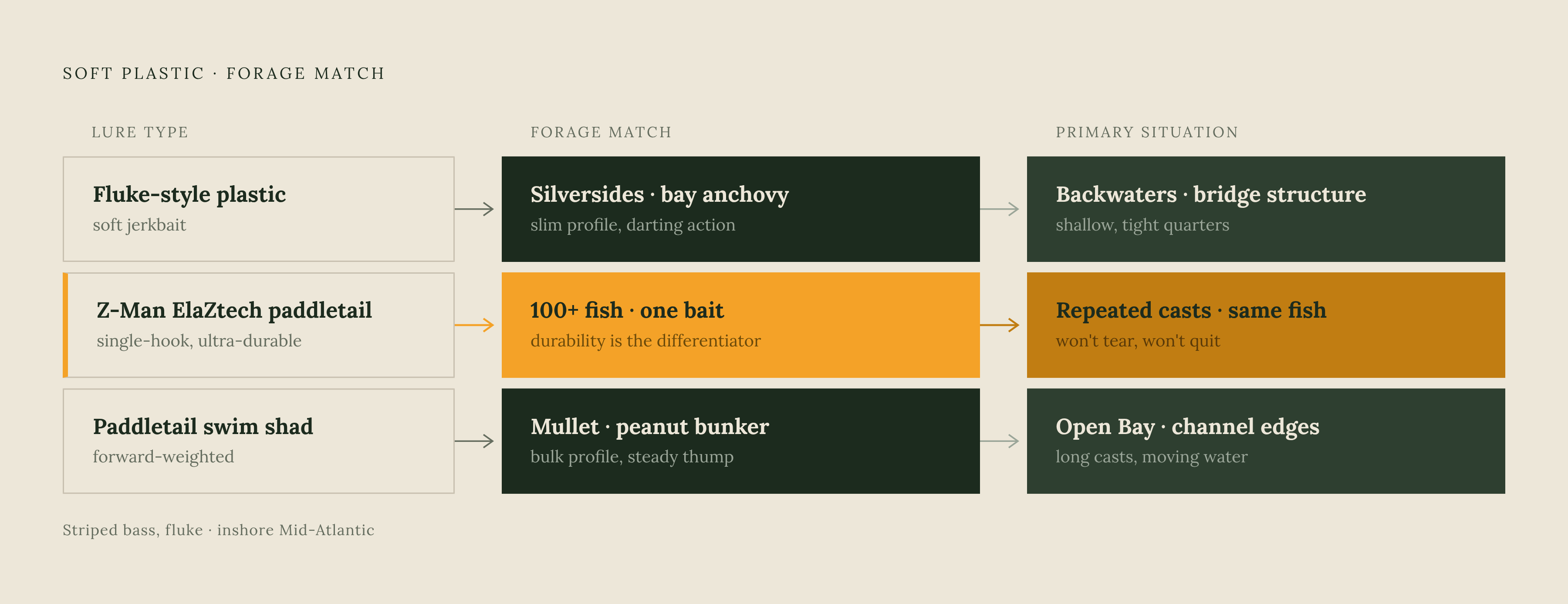
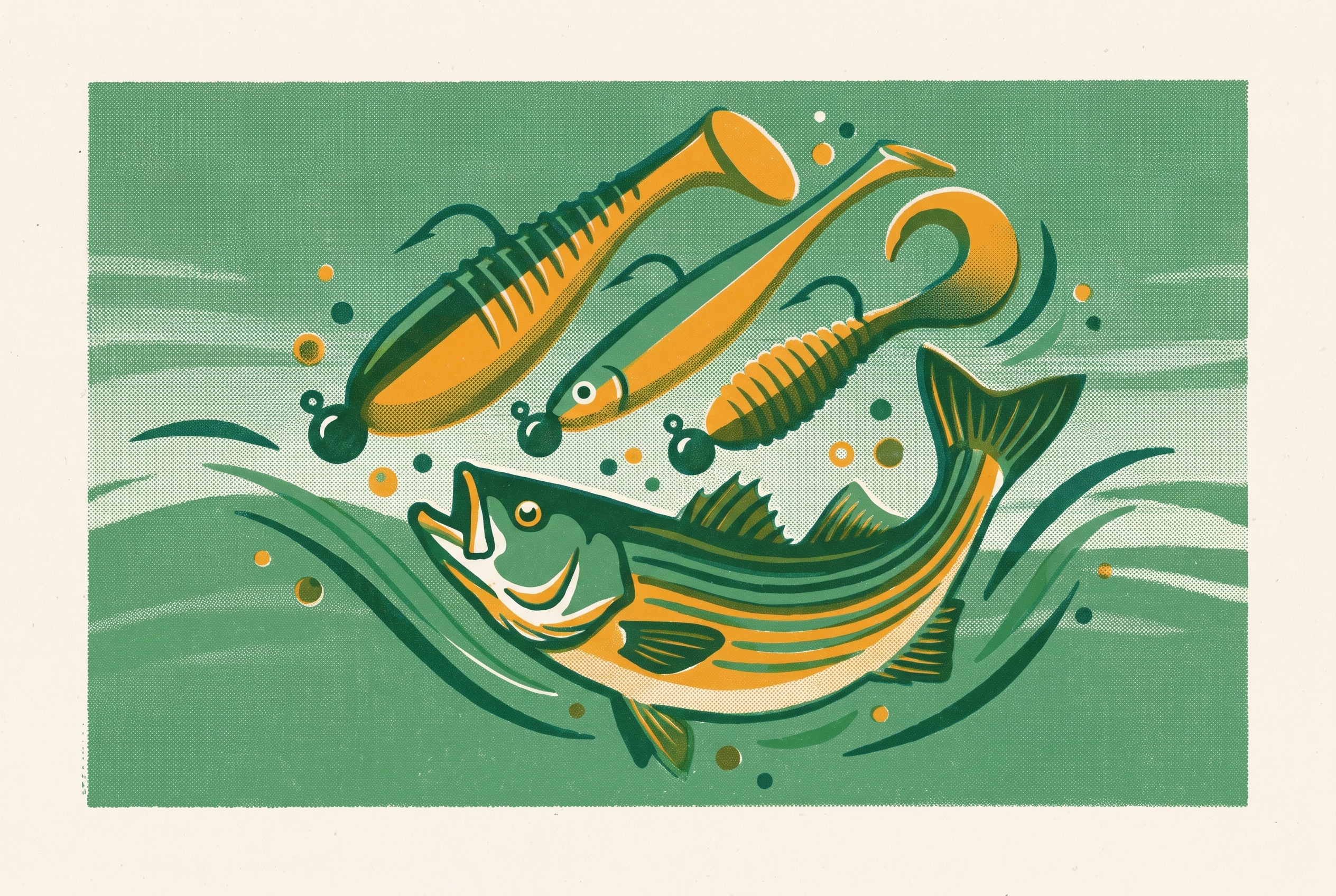
A fluke-style soft plastic on a jighead is the most versatile starting point for imitating silversides and bay anchovies. Its slim shape and darting movement match these forage fish at different depths and retrieve speeds. It is not confined to shallow water. The same style works around backwater structure, bridges, boulder fields, and current-swept channel edges, provided the jighead and retrieve suit the location.
A 5-inch fluke is the appropriate choice for cold-water schoolies, while 6- and 7-inch sizes become useful as fish grow more active later in the season. Light jigheads work in shallow backwaters, while heavier heads work in deep water or fast current. A mid-range weight works for most backwater striper outings.
White and pink work best in clean water, while chartreuse works in water stained by spring rain or runoff. These choices refine the presentation without replacing the decisions about profile and depth. Conventional plastics also offer a practical advantage at the rigging stage. They are more forgiving to mount, work on standard jigheads, and cost less per pack, making them a sound option for anglers who prioritize simplicity or seldom encounter bluefish. Where bluefish and hard structure repeatedly destroy baits, however, material durability becomes a stronger reason to choose differently.
Maryland DNR’s approved 2026 season has a full no-targeting closure in August and a one-fish-per-day slot limit when harvest is allowed.
Z-Man ElaZtech paddletails for anglers who want one bait to outlast an entire season
Z-Man ElaZtech addresses that durability problem without giving up extreme softness. Z-Man manufactures the material entirely at its South Carolina facility, producing a pliable bait that resists nicks, cuts, and tears better than other soft baits. ElaZtech’s resistance to both gives it a distinct role in Bay fishing, where an effective body may otherwise need frequent replacement.
Captain Griffin reports catching 100-plus fish on a single ElaZtech bait in the Bay. He uses single-hook rigs because they “attract aggressive eats, last forever, and yield the highest striper survival rates possible”. That is a guide’s account of what a single bait can achieve. It nevertheless supplies Bay-specific evidence for choosing the material under repeated use. His hook preference also places the rig within the fishery’s rebuilding needs rather than treating durability as the only measure of performance.
The Z-Man DieZel MinnowZ provides the minnow-shaped paddletail option, with lifelike action across retrieve speeds. Smaller sizes excel on spring schoolies, while its 4-, 5-, 6-, and 7-inch sizes attract fish of all sizes. Larger forage calls for a different body. The Z-Man MagZ SwimbaitZ supplies a larger swimbait profile, and the Z-Man HerculeZ offers a larger, heavier-bodied option for deep structure and larger fish. These Bay-proven choices are rigged on Z-Man HeadlockZ jigheads, the purpose-built match for the material.
That match comes with practical constraints of its own. ElaZtech cannot be stored in contact with other soft plastics because they will melt, and HeadlockZ compatibility narrows mix-and-match rigging options. Larger ElaZtech bodies are also more buoyant, potentially requiring heavier weights to reach the target depth. For deep summer and fall fishing, that adjustment is a modest inconvenience against the durability and single-hook release advantages. Around bridges and backwaters, the buoyancy can instead slow the sink and extend the strike window.
Paddletail swim shads for open-Bay casting and matching mullet and peanut bunker
Mullet and peanut bunker call for a fuller profile than the slender imitation used for silversides and anchovies. A larger paddletail swim shad with a forward-weighted body fits that role in open-Bay casting. It casts far and sinks quickly toward channel-edge fish. Its boot tail also produces consistent action on a straight retrieve, making it useful when the presentation does not require the darting movement of a fluke.
The 5- to 6-inch range is the go-to size for Bay striped bass and bluefish. Larger profiles are reserved for red drum in this selection. That distinction remains important during conspicuous fall blitzes, when actively feeding rockfish can still be selective about the profile they pursue.
Pearl Spot, Golden Bunker, Opaque White, and Green Mackerel are colors that have worked well in Bay conditions. An internally weighted Tsunami swim shad combines a convincing baitfish shape with ease of use and versatility across experience levels. Its straightforward retrieve is part of that accessibility. When fish suspend at 30–50 feet in summer, however, vertical jigging replaces horizontal casting as the preferred method with these profiles. Bluefish encounters also make stinger or wire-trace rigging relevant, although those additions are a separate consideration from selecting a striper-focused single-hook presentation.
What ICAST 2026 introduced and whether it changes anything for Bay anglers this season
ICAST 2026 showed continued innovation in soft plastics, with sea urchin-silhouette baits dominating the category. Their differences are still being established on the water. The Berkley PowerBait MaxScent Moeba comes in 3.5-inch and 4.5-inch sizes and uses soft plastisol from the PowerBait MaxScent formula. It continuously releases scent and sinks naturally under its own weight without added weight. Its softer construction comes with lower durability than competing urchin baits.
These introductions do not yet displace Bay-proven profiles. The coverage behind the new-bait discussion concerns freshwater bass, so applying those findings to Chesapeake rockfish remains an angler’s extrapolation. The Avatar Shad’s size and wobble action make it a credible addition for silverside and anchovy imitation. Urchin baits are more experimental because they lack the Bay-specific field evidence supporting flukes and paddletails.
How release practice and hook choice complete the soft-plastic selection decision
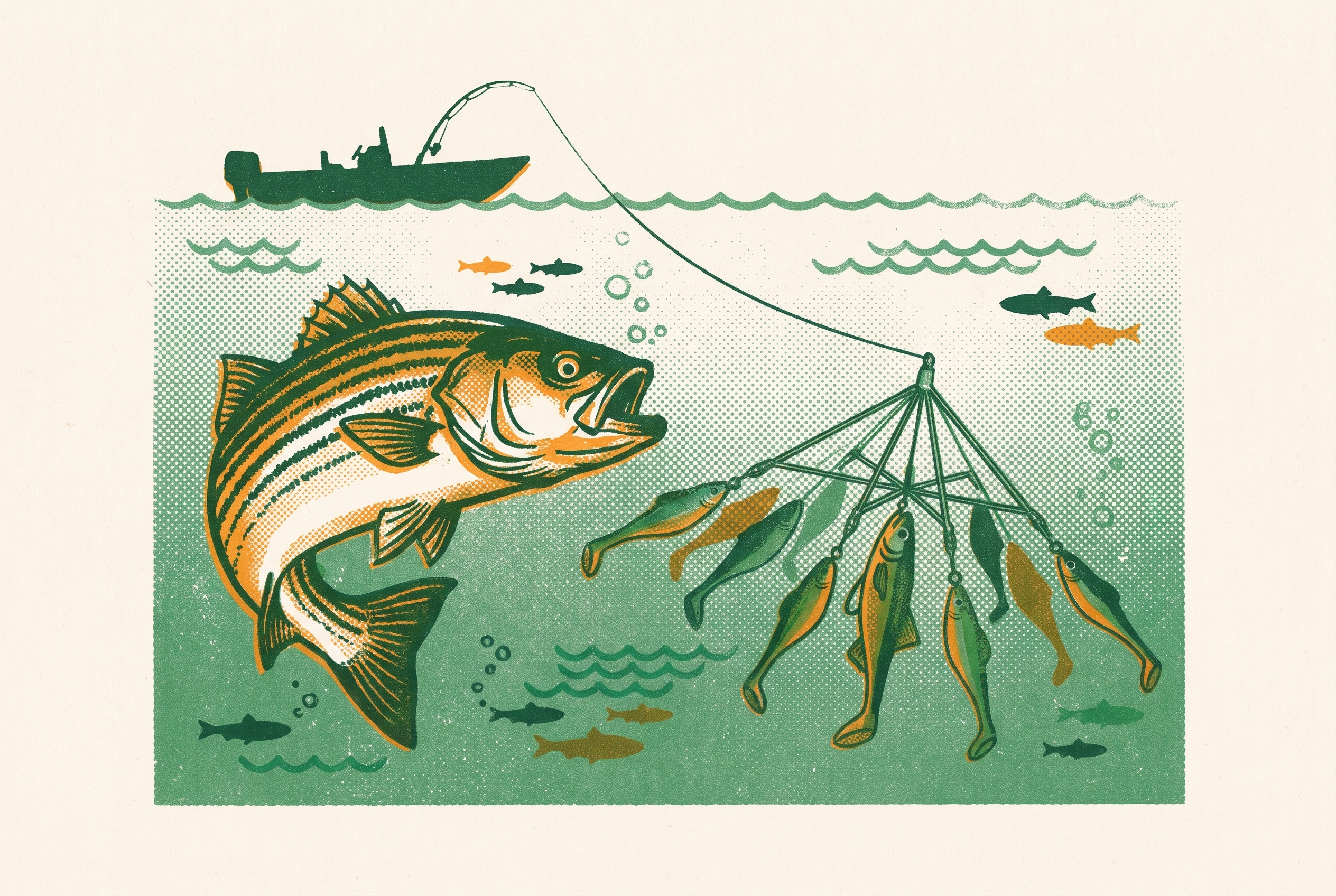
Hook configuration completes a decision that begins with forage. Single hooks on soft plastics improve post-release survival, which is especially consequential under the tight 2026 harvest slot. Weightless or lightly weighted single-hook rigs, including fluke-style and ElaZtech presentations where conditions allow, support quick, low-trauma releases. Treble-hooked swimbaits create more handling time and injury risk. Before fishing the lure, anglers should plan for the release and keep enough weight on the rig to reach the feeding depth.
Griffin’s preference for single-hook rigs reflects the value of older fish to the spawning population. Giant stripers can exceed 30 years of age and represent more than two decades of spawning seasons. Their survival has value beyond the immediate catch. That consideration becomes particularly acute just before or after the August closure, when anglers face the highest biological cost per fish handled. A release-oriented rig cannot erase the effects of summer heat, so hook choice and lawful seasonal timing belong in the same judgment.
The best selection therefore joins forage, depth, and release performance rather than optimizing one at the expense of the others. A convincing body fished outside the strike zone is incomplete, as is an effective presentation that needlessly increases handling and injury. The 2029 rebuilding deadline gives these choices a concrete horizon. Preserving the fish that must contribute to that recovery is part of keeping Chesapeake rockfish fishing productive in the years ahead.
Notes
- Soft Plastic Lures for Striped Bass Fishing
Informed the guidance on large soft plastic sizes and presentations for striped bass.
- ZMAN ELAZTECH BAITS
Supplied details on ElaZtech's durability, softness and storage limitations.
- Striped Bass
Provided the Z-Man model lineup (DieZel MinnowZ, MagZ SwimbaitZ, HerculeZ) and sizing for striped bass.