Essay Rockfish Tackle
Light Tackle Casting for Bay Rockfish in Shallow Water
How to cast light tackle to shallow rockfish and release them well.
Light-tackle casting for bay rockfish is a distinct discipline built around shallow-holding species, readable structure, and controlled lure presentation. Rockfish caught in less than roughly 60 feet can usually self-decompress and swim down after release, so shallow-water fishing done well is both engaging and better suited to catch-and-release than deep-water rockfishing.
Why bay rockfish in shallow water deserve their own approach
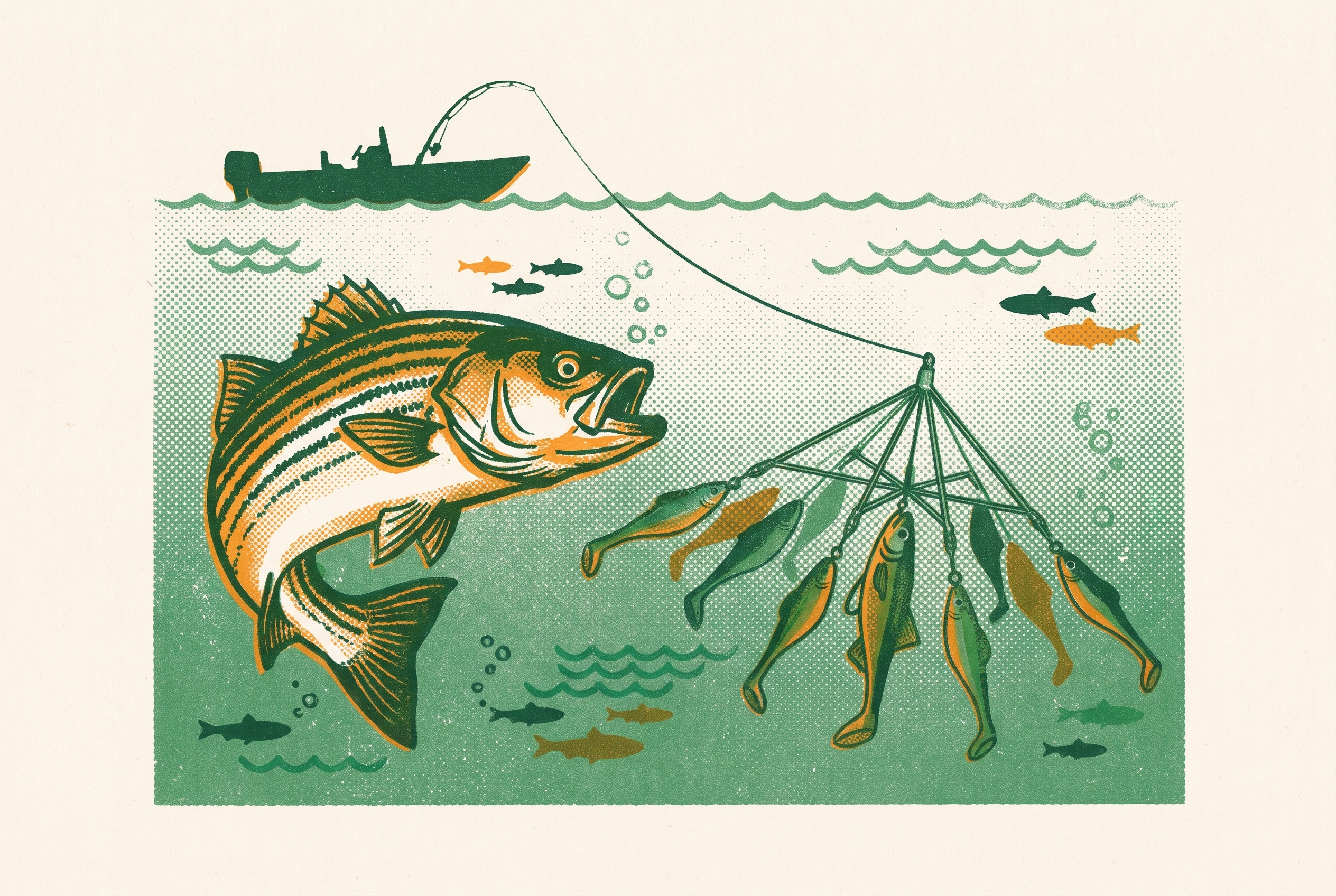
Conventional party-boat rockfishing uses heavy gangion rigs to reach fish in 250–400 feet of water. Shallow bay casting solves a different problem. The angler presents a lure around kelp and rock rather than simply delivering a rig to depth, so reading structure and controlling the retrieve become central skills. A lighter rod alone does not make the change.
The trade-off is smaller fish in exchange for a more direct fight, with tackle sensitive enough to make each take and run distinct. Access is broader as well. Private boaters and kayak anglers are the principal beneficiaries, but shore-based anglers can also reach suitable habitat without charter access. Some nearshore zones offer year-round opportunities for shore, pier, and kayak fishing where boat-based groundfish seasons are more restricted, although those distinctions depend on local rules.
Which rockfish species live shallow enough to cast to, and where they hold
Black rockfish are the main shallow-water target along the Northern California and Oregon coast. They are frequently the primary rockfish in catches made by private boats and kayaks working rocky structure within casting depths. That makes them a practical starting point for this method. Their availability connects the choice of fishing ground directly to the tackle and presentation, rather than treating every rockfish species as an interchangeable target.
Kelp rockfish occupy the shallowest niche of any California Sebastes, with a maximum depth around 46 m. Their association with kelp makes them particularly suited to casting near the canopy, where a lure can pass through the fronds toward open water. Copper rockfish, by contrast, concentrate on specific reef structures. That concentration makes productive reefs vulnerable to localized fishing pressure, a distinction that becomes important when interpreting California’s species-specific limits.
These fish hold around kelp canopy, rocky reef edges, boulder fields, and the places where one gives way to another. Surface kelp offers a visible reference, while charts or sonar help identify submerged features from a kayak or small boat. Accessible structure must suit the species being pursued.
How the casting technique differs from conventional rockfishing
Casting ahead of a drifting boat gives the jig time to reach bottom before the boat moves over it. Once the line becomes perpendicular to the boat, a straight retrieve brings the lure back through the water. That retrieve can get bites without much rod work. If it does not, a jerk-sink-jig cadence changes the lure’s action on the ascent without requiring a different rig.
The evidence is limited to this single account. The newcomers in this account were casting and retrieving rather than just using smaller versions of deep-water equipment. The method gives an inexperienced angler a clear sequence to follow and a way to change presentation when the first retrieve fails.
Kelp fishing changes the path of that presentation. The recommended approach is to paddle or pedal quietly to the edge, cast a small swimbait into the canopy, and work it toward open water with slow hops. Kelp rockfish ambush from within the fronds, so the retrieve must cross their strike zone. Pedal-drive kayaks offer a tactical advantage here because hands-free propulsion allows position control in current while casting or fighting a fish near structure.
Lure selection matched to depth and species
At the shallowest kelp edge, a small paddle tail on a light jig head fits the available space and the slow-hop presentation. The lure must be small enough to work inside the fronds and light enough to remain in the strike zone during that retrieve. A heavy gangion is poorly matched to this task, regardless of its usefulness offshore.
The 60–150 ft zone requires a different weight range. For private boats and kayaks fishing that zone, a 4-inch Berkley Gulp swimming mullet or Big Hammer on a 2- to 4-oz leadhead is a practical alternative to the gangion for browns, coppers, gophers, and occasional lingcod. This deeper application of lure fishing has different release-survival conditions from water under 60 feet.
Metal jigs also work across the shallow range and often draw larger fish. Casting depth allows a jig with built-in action rather than one intended purely for vertical presentation. The lure’s weight and action must suit the path it takes through the habitat as well as get it to the bottom.
Rod, reel, and line configuration for casting in shallow bay environments
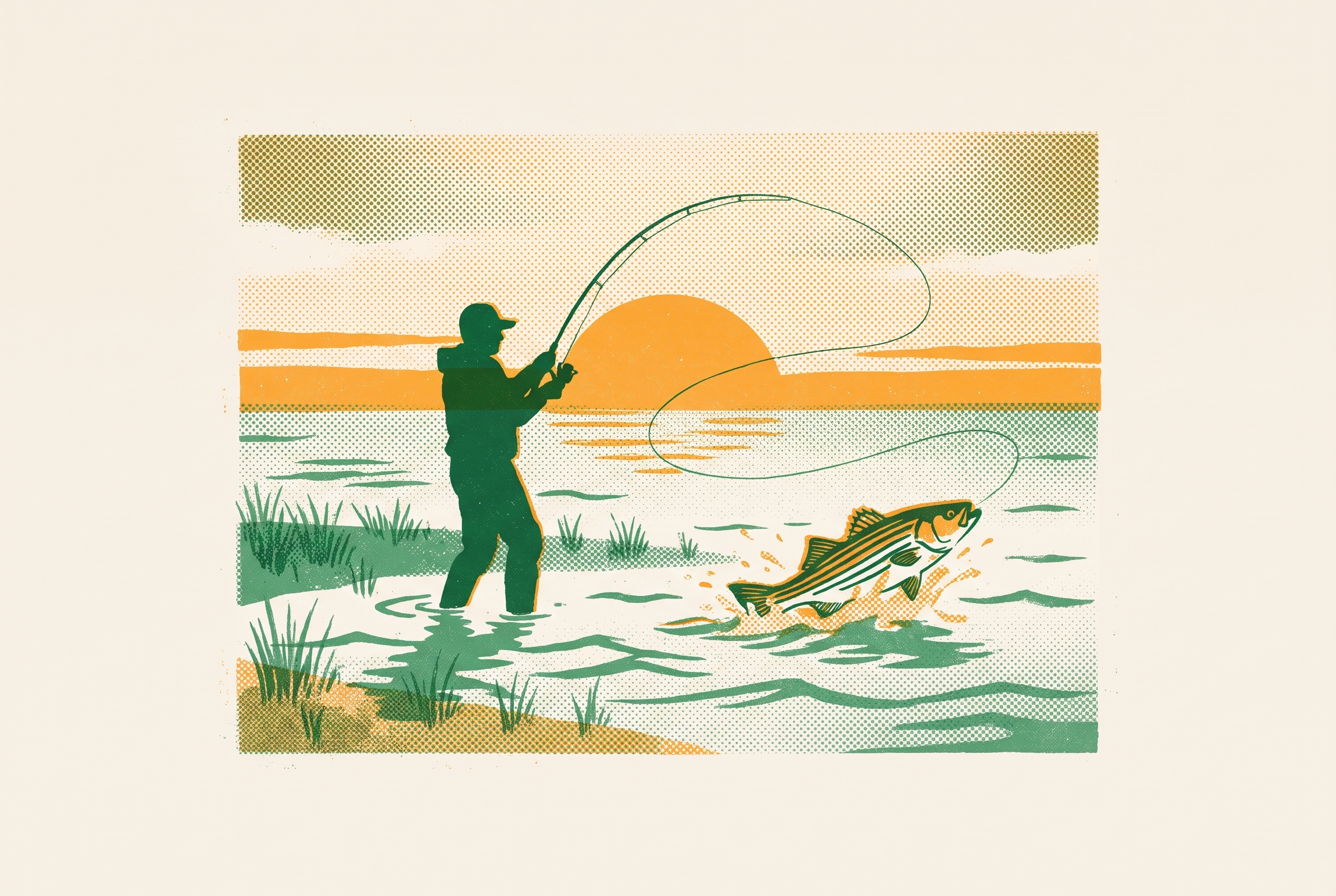
A shallow-water spinning outfit needs backbone to control fish near structure and a sensitive tip to pick up subtle takes. The rod must present the selected lure while retaining enough control for the habitat being fished, and the reel and line must belong to that same system. “Light tackle” describes a deliberate balance.
Daiwa describes its Saltist Inshore Light Action Surf Rods as designed for light-tackle surf and bay fishing, including shallow-water rockfish. The range starts at an MSRP of $169.99 and includes multiple lengths and actions, with drop-shot-specific guide spacing on the 762 and a jerkbait-specific 832 model. Seaguide Saltwater Guides, an EVA rear grip, and suitability for braided line complete the relevant configuration.
For newcomers, a short ultralight rod, small spinning reel, light braid, and curly tail jig head provide an accessible entry configuration. Small fish remain engaging on that outfit. Its modest cost also makes equipment loss less consequential, although affordability does not remove the limitations of ultralight tackle around rock. A general session setup can instead use a 7-foot medium spinning rod with 10–15 lb braid and a fluorocarbon leader.
The trade-off is smaller fish in exchange for a more direct fight, with tackle sensitive enough to make each take and run distinct.
The honest limits of light tackle in this environment
A large lingcod or halibut can break a light setup, so the gear brought aboard should take account of whether those fish are likely to be there. Bring a backup rig or heavier rod where those species are expected. A break-off in that habitat is a known trade-off.
Some structure also calls for heavier tackle from the outset. Deep rocky reefs and boulder fields targeted for sheephead and cabezon demand enough weight and strength to cast, reach bottom, and free snagged rigs. Light tackle’s strongest application remains the smaller, shallower-holding species, with an accepted risk of losing fish or rigs around structure.
Why fishing shallower than 60 feet dramatically improves release survival
Rapid ascent from depth causes barotrauma as a rockfish’s swim bladder expands. The fish becomes excessively buoyant and may be unable to return to depth under its own power. A released fish can therefore remain stranded at the surface, exposed to injury and predation. Returning it to the water is not, by itself, evidence of a successful release.
Descender assistance addresses that immediate inability to submerge, but survival does not mean the fish is unharmed. NOAA Fisheries research found that surviving fish remained affected by capture and barotrauma for 30–60 days after a successful deep-water release. The effects can therefore outlast the release itself. This sublethal cost separates the visible outcome at the boat from the longer biological consequences of capture.
Water shallower than roughly 60 feet changes that calculation. Rockfish caught there can typically self-decompress and submerge without descender equipment. The threshold is approximate. Nevertheless, it provides a biological reason to select shallow grounds when release is an intended part of the session.
Time out of water remains important at any depth. Returning fish quickly improves their chance of survival, and some species become meaningfully less likely to survive as exposure time increases. For anglers fishing under roughly 60 feet, the practical response is immediate return to the water rather than an extended surface interval. The conservation benefit comes from shallow capture and prompt release together.
What 2026 California regulations signal about nearshore population pressure
The 2026 California groundfish regulations allow fishing at all depths in state waters from the California/Oregon border to Point Conception during the April 1 through December 31 open season. South of Point Conception, nearshore rockfish close October 1–December 31. Geography therefore determines how the season applies.
The overarching RCG aggregate limit remains 10 fish per person in combination across all rockfish, cabezon, and greenlings. Within that total, the copper rockfish sub-limit is 1 fish per person across the state. Copper rockfish’s concentration on particular reefs makes them especially susceptible to localized depletion where fishing pressure is high. The species-specific restriction responds to that vulnerability rather than assuming the aggregate limit protects every population equally.
The California state wildlife agency’s September 18, 2025 announcement states that a new 2-fish canary rockfish sub-bag limit took effect under state emergency regulations on August 28, 2025. The corresponding federal rule took effect December 16, 2025. Those fish count within the 10-fish RCG limit. These restrictions signal attention to population pressure and strengthen the case for quick release where shallow capture makes it more likely to succeed.
Putting it together: a practical session on the water
For a practical session, begin before launch with the season and species limits that apply to the fishing location and platform. For California boat-based fishing, check which side of Point Conception the trip falls on, and check local rules for shore and kayak access. Rig the medium spinning outfit with a jig head that suits the depth to be fished. Where lingcod or halibut are expected, bring the heavier outfit so the light setup does not have to handle every fish.
Next, select kelp edges, reef transitions, or boulder habitat in less than 60 feet using a chart, sonar, or visible surface kelp. Position upwind or upcurrent of the chosen structure so the cast leads the drift. Let the jig reach bottom, then retrieve as the line comes perpendicular to the boat. If the straight retrieve produces no response, change to the jerk-sink cadence before changing the entire rig.
At a kelp edge, make the approach quiet. Send the small paddle tail into the canopy and use slow hops to bring it toward open water, keeping the presentation within the habitat. If a large non-target fish takes the lure, let the drag work and accept the possibility of a break-off.
For a fish being released, return it to the water immediately. In less than roughly 60 feet, it will typically submerge under its own power. If it struggles, support it briefly until it swims down. The session ends with the result that gives shallow-water casting its strongest conservation advantage, a fish able to return to depth without the buoyancy barrier of deep-water capture.
Notes
- SALTIST INSHORE LIGHT ACTION SURF RODS
Supplied the Saltist rod details: starting price, available lengths and actions, guides, grip and braid suitability.
- Shallow water rockfish
Informed the guidance on casting technique, lure choices and light-tackle setups for shallow-water rockfish.